
I'd Survive a Horror Movie

If I ever end up in a horror movie, I think I’m definitely surviving.
Part of that confidence comes from knowing I’d never pull a Mayor Larry Vaughn from Jaws (1975). A woman washes up in pieces and this man’s first thought is, “Let’s keep the beaches open, folks! Gotta think of the economy!” Sir, your economy is floating in literal pieces. Instead of shutting things down, he slaps on a smile and calls it “one of the best summers we’ve ever had,” as if that’s not a leg drifting past him. If he’d closed things for five minutes, half the town might still be alive. It’s funny when it’s a movie, but in real life the Mayor Larrys usually get re-elected.
That’s the thing about many horror movies. Half the time, the monster isn’t even the real obstacle to survival—it’s the people who insist everything’s fine while a masked killer is breathing on the outside of the window. Most of the time, surviving a horror film just requires an ounce of common sense. If a house feels cursed, I’m out. If the dog refuses to go inside, I’m also refusing to go inside. I don’t need to investigate strange noises, I don’t need to read Latin out loud, and I most definitely don’t need to “check the basement.” My entire strategy can be summed up in one sentence. Believe the obvious, trust your instincts, grab your keys, and call Ed and Lorraine Warren to clean up whatever’s left behind.
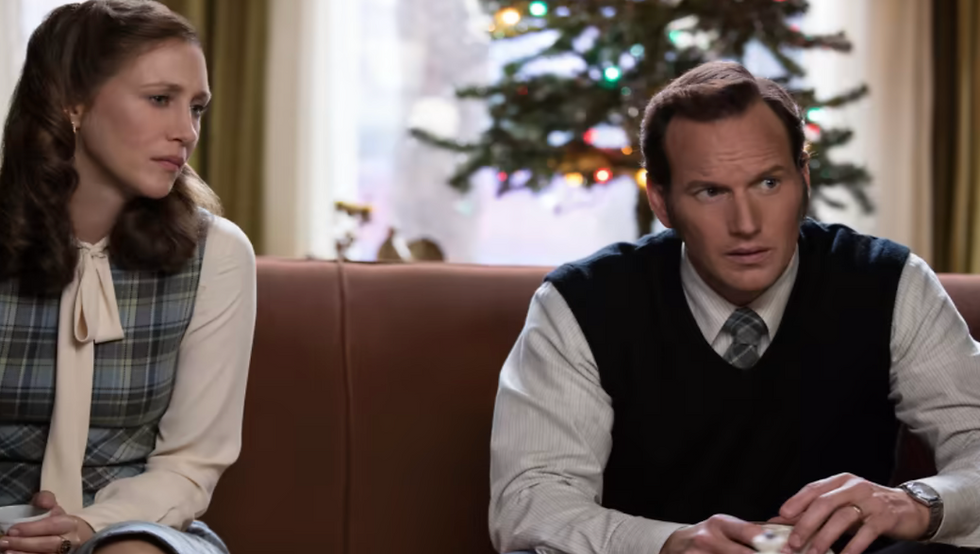
Image Source: The Conjuring (2013), directed by James Wan, featuring paranormal investigators Ed and Lorraine Warren.
Rule One: Don’t Be Overly Curious
Curiosity has the mortality rate of a scream queen. Someone always notices something strange, like a door creaking open on its own, a whisper curling up from the basement, a figure lingering just long enough to vanish, and instead of running, they lean in closer. It’s like watching natural selection unfold in slow motion.
In Jeepers Creepers (2001), Trish and her brother Darry are driving down some endless stretch of nothing when they spot a man dumping what is unmistakably a corpse. A normal person would keep driving, call the cops, and swear off country roads for the rest of their life. But Darry, bless his doomed curiosity, decides the smart move is to turn back, stick his hollow head in the pipe, and “check it out”. By the power of basic deduction, it’s safe to assume that what’s going on involves a mural made entirely of murdered people. The Creeper doesn’t even need to chase him. He just waits for curiosity to deliver dinner.
If I saw a man disposing of a body, I wouldn’t investigate. I’d relocate. Maybe also delete my license plate records while I’m at it, and burn the car once I’m out of that cursed place. Sometimes it’s smarter—and far more convenient—to just mind your own business.
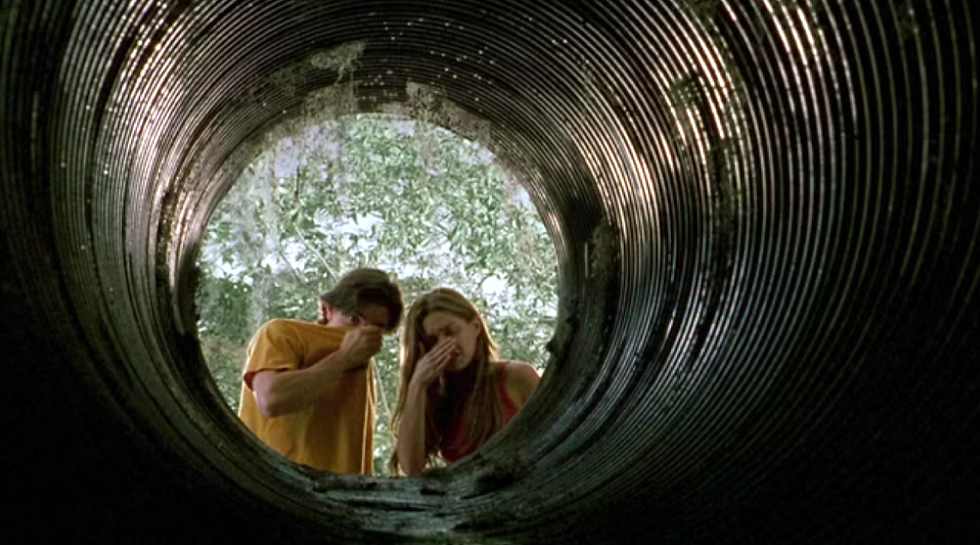
Image Source: Jeepers Creepers (2001), directed by Victor Salva
Rule Two: Don’t Split Up
Few choices in horror films lead to disaster as consistently as the decision to split up and “cover more ground”. Someone always says it with conviction, like being alone will somehow make them safer. It never does.
The Cabin in the Woods (2012) captures this perfectly. A group of college friends travels to a remote cabin for a weekend getaway, unaware they’re part of a ritual controlled by a secret organisation called the Facility. Every decision they make is carefully engineered—from the lighting to the pheromones in the air. When they wisely agree to stick together, the Facility intervenes, releasing a chemical that clouds their judgement. Within moments, Curt suggests splitting up, and the rest follow without question. Soon after, the cabin falls silent except for the sound of running and screaming.
If I were there, everyone would be moving as a single entity. No one’s checking the attic, no one’s scouting the basement, and no one’s “right behind you.”

Image Source: Cabin in the Woods (2012), directed by Drew Goddard
Rule Three: Never Read the Creepy Books Out Loud
Nothing good ever comes from a dramatic reading of a creepy ancient book in a horror movie. There’s always someone who finds a text coated in dust and bad energy, studies a page written in a language older than reason, and decides now is the time for a public recital. The ink might as well spell “please summon a demon.”
In Evil Dead (1981), a group of friends discovers the Necronomicon, a book bound in human skin and filled with words no one should ever pronounce. It could have stayed quietly on its shelf, but curiosity is a powerful curse. Upon opening it, they’re reciting passages that sound like an exorcism in reverse. Within minutes, the forest turns feral, their friends start levitating, and the whole cabin becomes a demonic warzone.
If I ever stumble upon a book like that, I'd leave it exactly where it sat and pretend I never saw it. Not read it, not translate it, not even dust around it. Some things are written to be preserved, not repeated.

Image Source: Evil Dead (1981), directed by Sam Raimi
Rule Four: Trust the Dog
Dogs always know. They growl at empty hallways, bark at invisible things, and stare at corners that shouldn’t move. But instead of listening, people in horror movies tilt their heads and say, “What is it, boy?” as if the dog has to file a full incident report before they start running.
In The Conjuring (2013), the family’s dog refuses to step inside the new house. It plants itself outside, pacing and whining, because even the dog knows this is how ghosts find their tenants. The humans, of course, ignore the furry clairvoyant and move in anyway, confident that nothing bad has ever come from disregarding the only character with instincts.
If I ever find myself in that situation, I’d follow the dog’s lead without hesitation. Pack the bags, grab the keys, and drive somewhere with fewer supernatural floorplans.

Image Source: The Conjuring (2013), directed by James Wan, featuring my favourite character in the movie.
Rule Five: Do Not Be an Airhead
Panic is understandable. Stupidity is not. Every horror movie has at least one character who forgets how cars, phones, or doors work the moment danger appears. It’s like fear erases motor skills.
In Night of the Living Dead (1968), Barbra gets attacked in a graveyard and somehow escapes to a car with the keys still inside. A normal person would lock the doors, start the engine, and leave the zombie in the dust or maybe even drive over his uncanny body. Instead, she sits there for a good minute or two while the creature slaps at the windows like it’s auditioning for a detergent commercial. When it grabs a rock and smashes the glass, she panics, fumbles the controls, and ends up rolling into a tree. The zombie doesn’t have to be fast when its prey is determined to self-destruct.
Common sense isn’t a luxury item. Unfortunately, it’s always the first thing to die.

Image Source: Night of the Living Dead (1968), directed by George A. Romero
Rule Six: Watch Horror Movies!
Most horror movies could wrap up in ten minutes if someone just acted like they’d seen a horror movie before. But that wouldn’t be much of a movie, would it? The real fun is watching people ignore every warning sign, wander into the dark, and call out “hello?” to something that most definitely isn’t friendly. Horror works because people don’t. It is truly chaos, panic, and terrible decision-making turned into entertainment.
And honestly, I wouldn’t have it any other way.
Written by: Joelle
Edited by: Videl, Rayden, Chiong Teng


Comments